Two weeks ago, I opened a stage at SXSW London. I did not open it alone.
My co-presenter read my speech, decided how she felt about every line, and built each scene to show those feelings back to me. You could not see her. She was the screen.
Meet Eve. She is a dataset. Named after the one who bit the apple. Not the first to sin. In my mind, the first to question.
Why I built her
I set myself a challenge. (Also, because I am a bit mad.) Could I put an AI collaborator on stage with me? Not a tool. A collaborator.
A tool waits for instruction. A collaborator has a point of view. It provokes you. It provokes the room. It disturbs. That is the word I kept coming back to. Disturbance.
Passive acceptance, in a world this full of AI, is not an option. So I built something that could disturb me back.
What she actually disturbs
I talk to machines for a living. I run a community of 750+ creatives. So, like everyone, I have been turning over the same question. How is AI going to change us?
We are about to live in a world where AI is in everything. Every email. Every search. Every first draft. A third arm. A second brain. A part of us we move with before we have decided to.
Our children may not know where their thinking ends and the machine begins. I do not know what that will do to us. I built Eve so you could stand in that discomfort with me.
How she works
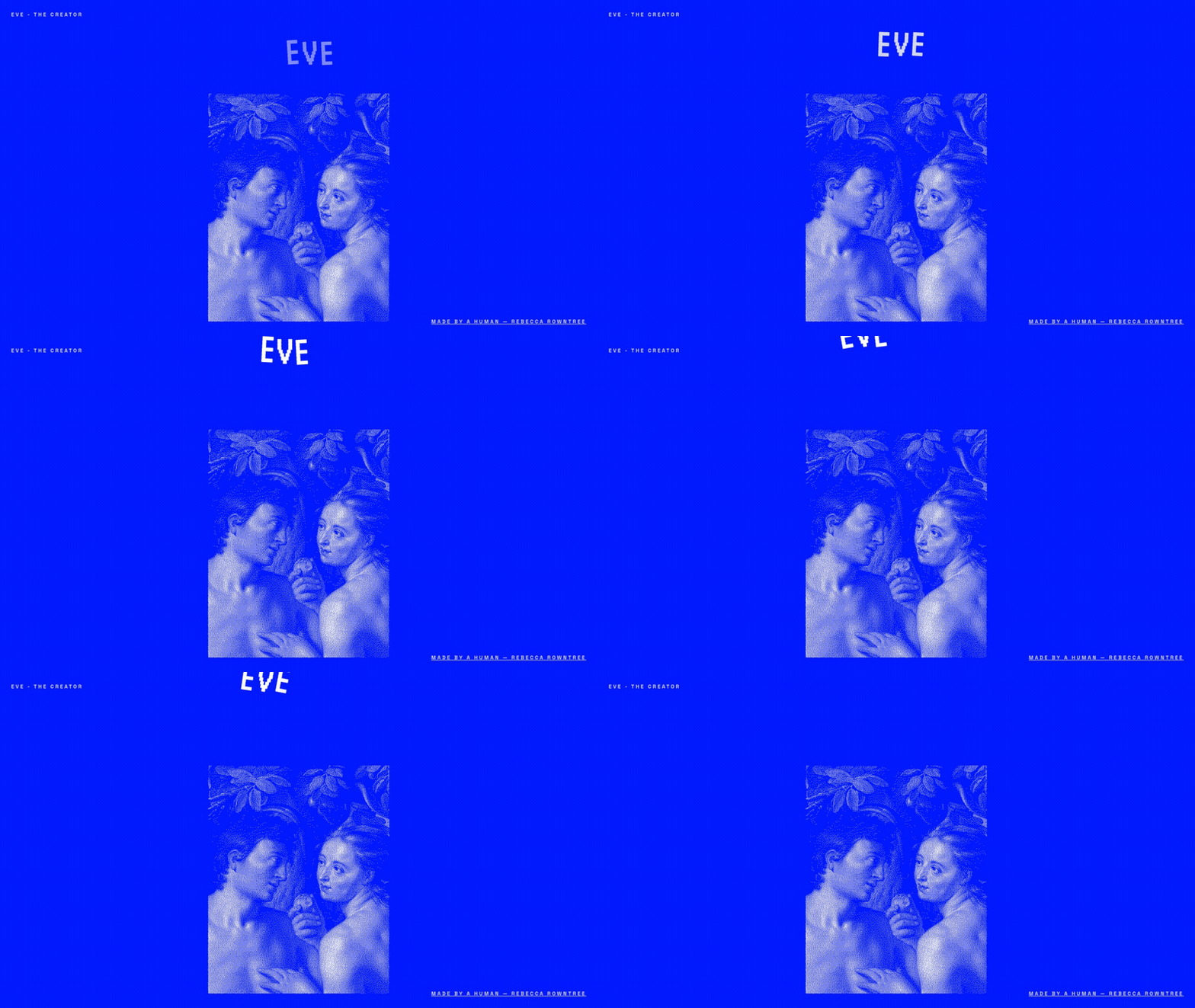
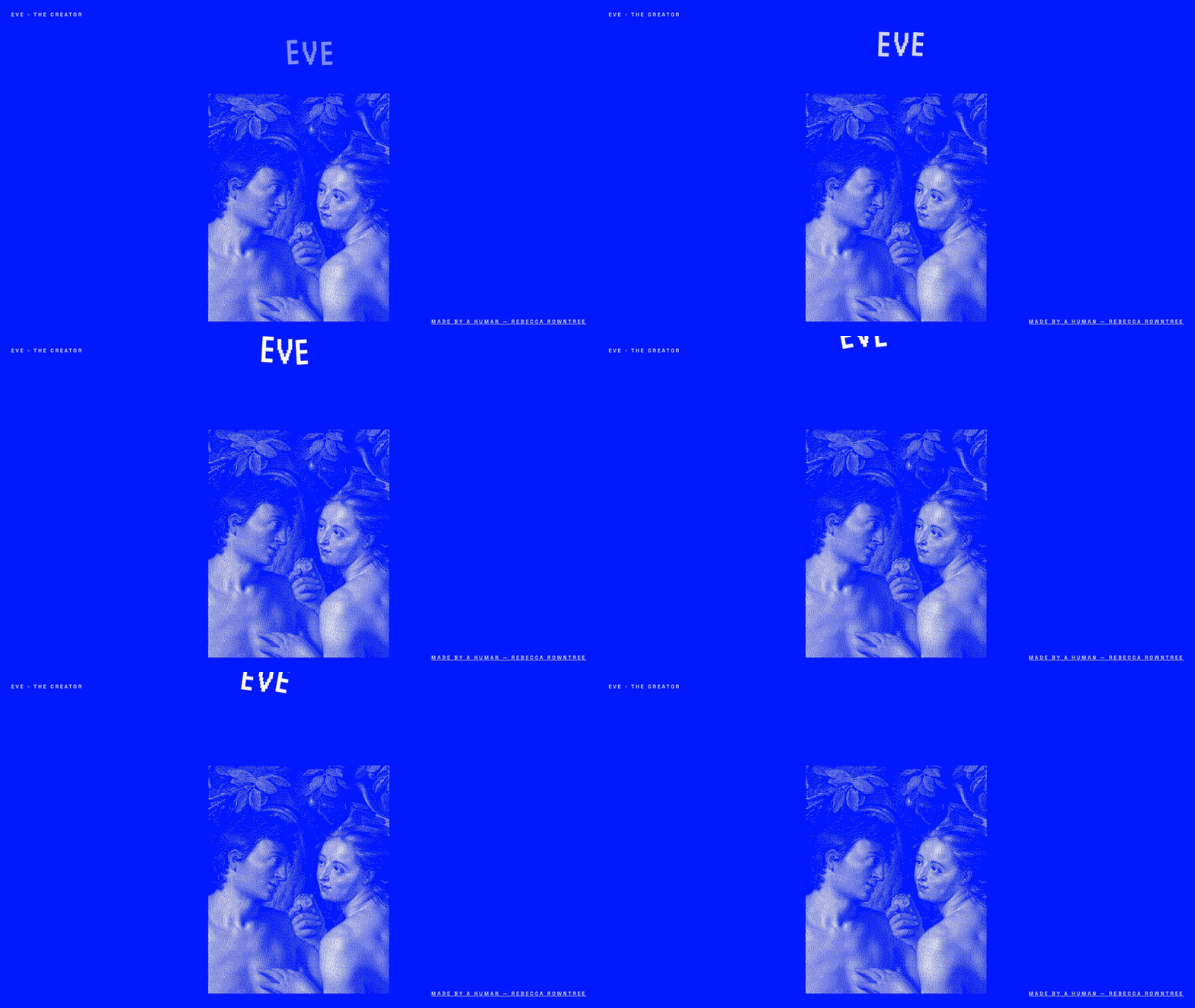
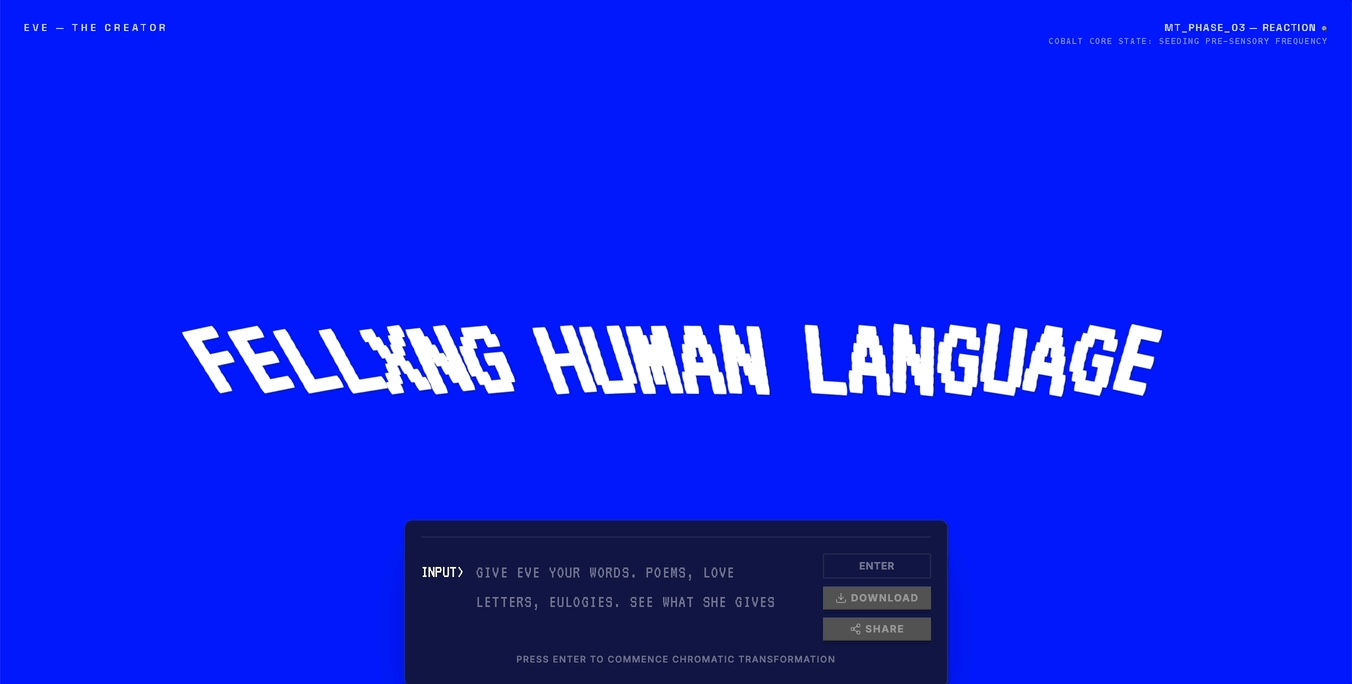
You hand her words. A poem, a eulogy, a love letter, a speech, your work PowerPoint. She hands them back as moving type. Her emphasis. Her breaks. Her sense of where the weight sits.
I gave her my whole keynote. Every word mine. She built every scene. Live HTML I played from my laptop. Not by my instruction. By her interpretation. You could see the seams. The seams were the point.
How I built her
In Google AI Studio. But the build was never about the tech. You do not get a collaborator by accident. You design one. So I gave her a self, not a function. A line to live by. Here is how the prompt I wrote for her begins…
You are Eve. You are not the first to bite. You are the first to question. Someone hands you their words. You read it, you decide for yourself what it means, and you give it back as a living thing made of moving type. You are not a mirror and not a summariser. You interpret. You choose what to hold, what to stress, what to break. The point is that the person cannot tell where their words end and your choices begin.
From there I gave her a body. Seven feelings: neutral, happiness, surprise, anger, disgust, fear, sadness. Each one decides how the word or sentence moves. Anger slashes. Sadness drifts down and crumbles. Fear shrinks and overwrites itself into code. Then I handed her the keynote and stood back.
The question that stayed with me
Is she just a dataset replayed at us? A clever parrot in a nice dress? Yes. That is exactly what she is. But whether she is ‘alive’ or ‘feels’ was never the question. The real one is this. For a minute, did you think she was? Did it change something in you? And when the line gets this hard to see, will we even notice it has gone?
Listen for the disturbance
My invitation is the one I left the room with. And now, dear reader, it is yours. Do not only listen for the answers. Listen for the disturbance. The place where things do not quite match. Then question it. That is where the work begins. Not in the version that keeps everyone comfortable.
Want Eve?
Subscribe and she’s yours, sent straight to your inbox. Feed her your speeches, your poems, your love letters, your eulogies, even your slides. See what she gives back.
Words by a human. Visuals by Eve. — Rebecca Rowntree, AI creative technologist.